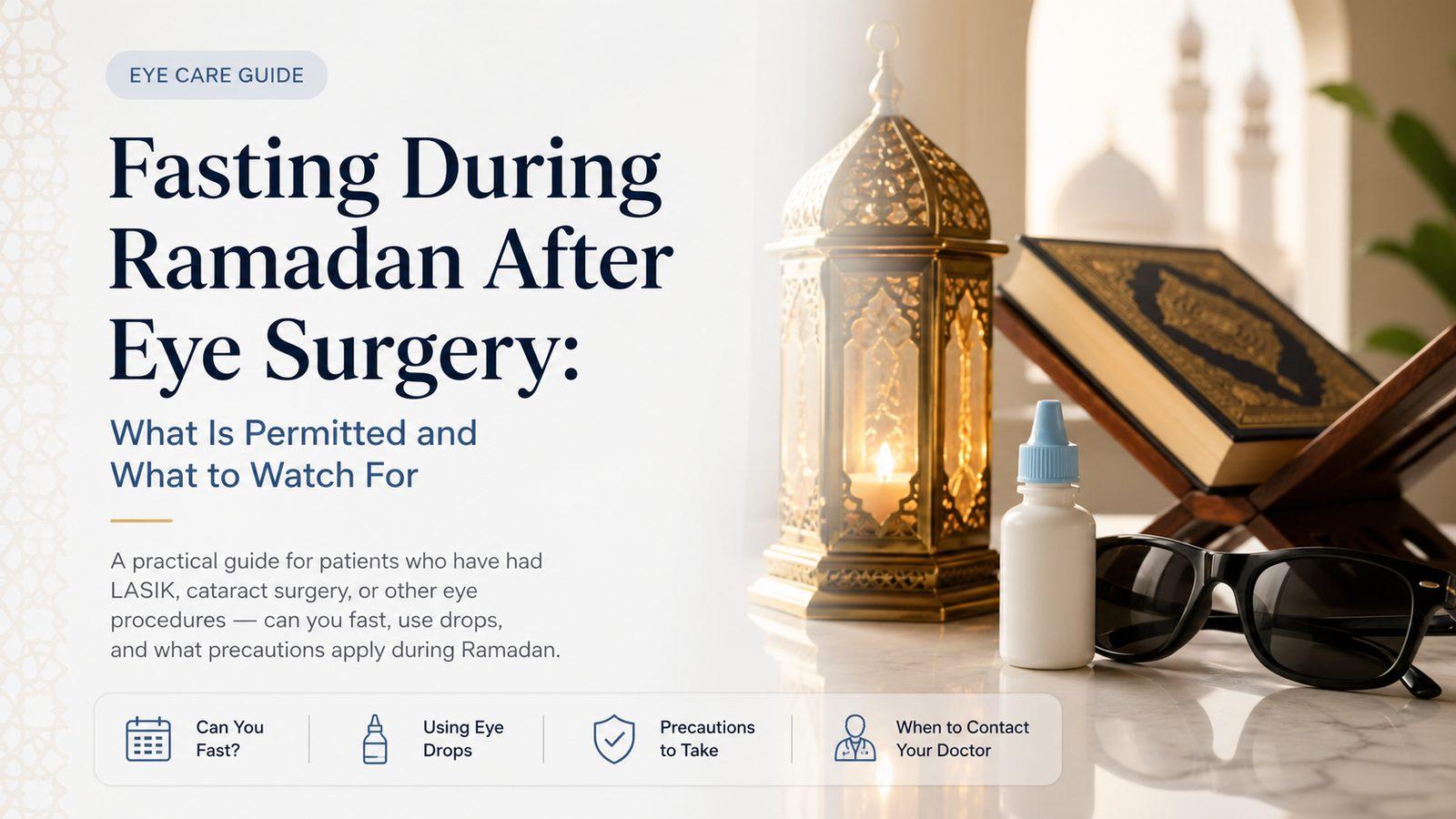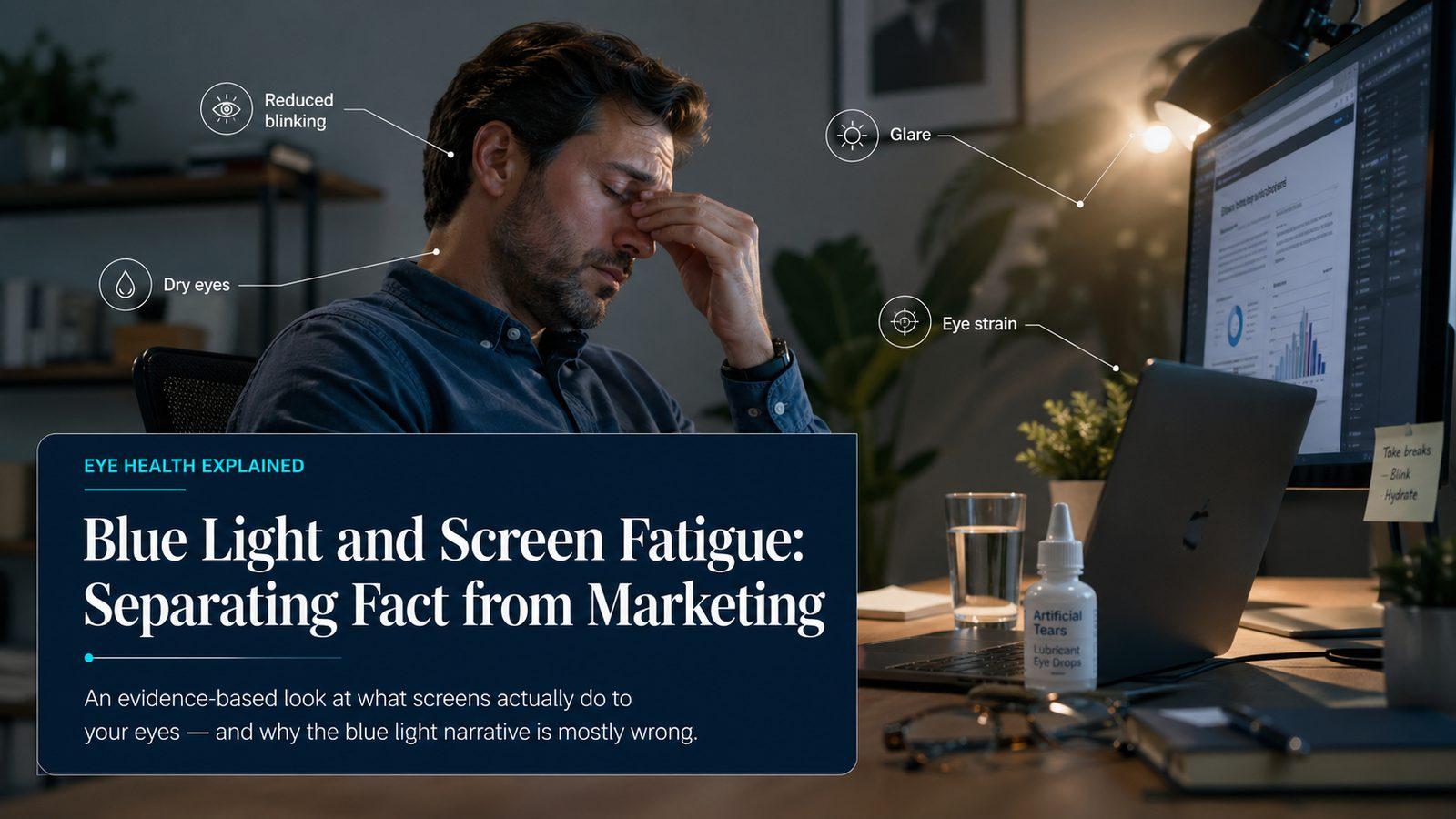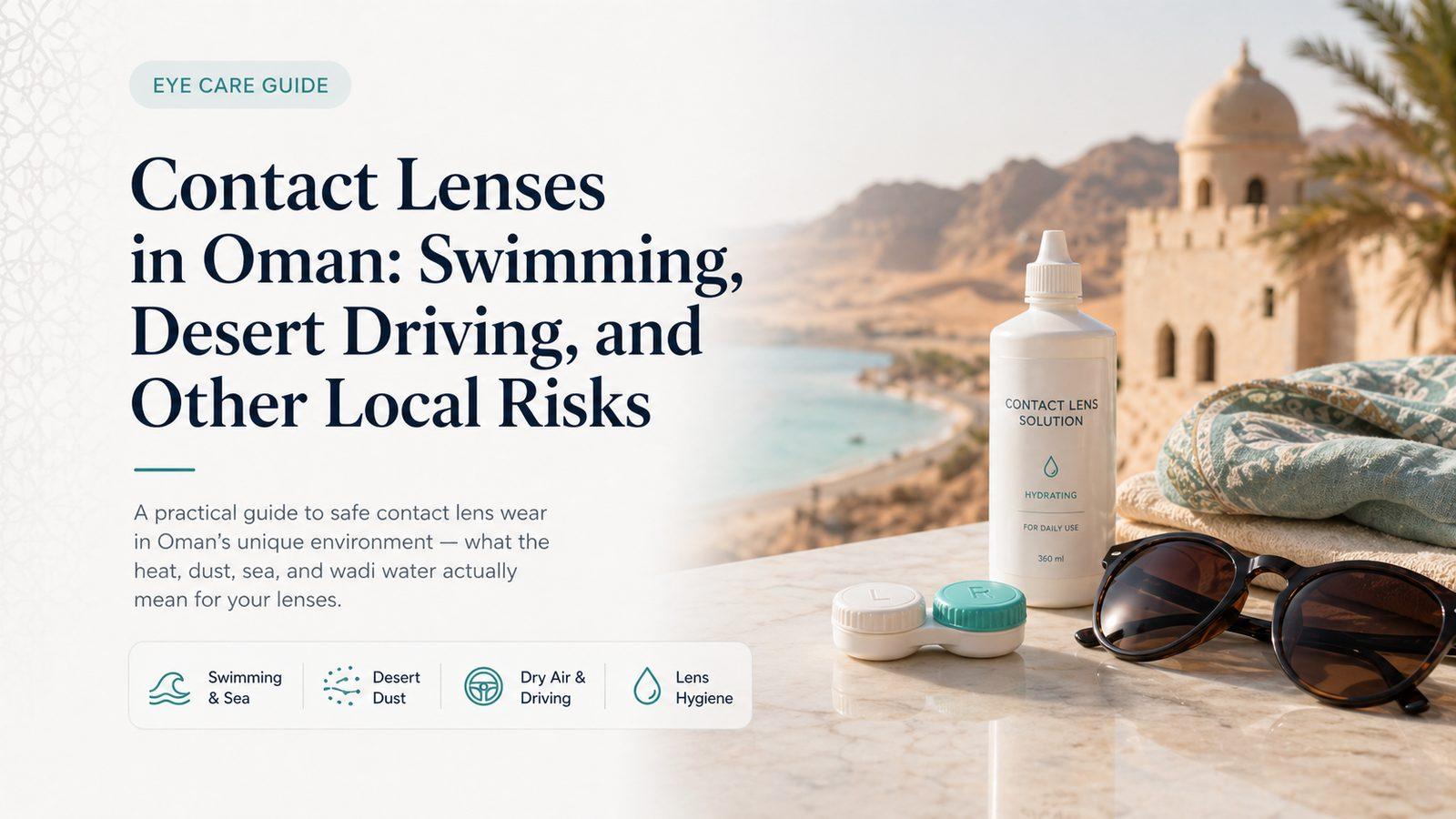
Contact lens wearers in Oman face a combination of environmental challenges that simply do not exist in the countries where most contact lens advice was written. The standard instruction sheet from a European contact lens manufacturer was not written for a Muscat summer, a wadi trip, or Ramadan fasting.
Heat and evaporation
Soft contact lenses contain 38–75% water. In 45°C outdoor air with low humidity, that water evaporates faster than the tear film can replenish it. The lens tightens on the eye, traps debris, reduces oxygen transmission, and becomes uncomfortable in a way that invites rubbing — which in turn risks corneal abrasion or, in keratoconus patients, dangerous corneal changes.
Practical rules:
- Carry preservative-free artificial tears and rewet lenses every 1–2 hours outdoors in summer.
- Switch to daily disposables in summer (reduced protein deposits, no reuse risk).
- Consider glasses for outdoor activities > 2 hours in peak summer.
Desert driving
Dune bashing, off-road driving, and Omani desert camping involve dust fine enough to penetrate almost any gap. Dust particles under contact lenses cause mechanical corneal abrasion and risk keratitis.
Rules:
- Wear wraparound sealed goggles (ski goggle style) over contact lenses if doing serious off-road activity.
- If dust gets under a lens — remove immediately, flush with saline, inspect, and do not reinsert if there is any corneal discomfort.
- Never sleep in lenses after a dusty outdoor day, even if lenses feel comfortable.
Swimming — the most dangerous activity for contact lens wearers
Acanthamoeba keratitis is a vision-threatening corneal infection caused by a waterborne amoeba. It is almost exclusively a contact lens complication and is associated with swimming in lenses. Oman's wadis and some pools carry significant Acanthamoeba risk.
Rules (non-negotiable):
- Never swim in contact lenses — not in the sea, not in pools, not in wadis, not in hot tubs.
- If lenses accidentally got wet during swimming, remove immediately, discard (daily lenses) or disinfect thoroughly (monthly lenses with a 6-hour soak), and monitor for any eye redness or pain in the following week.
- If you develop eye pain + photophobia + redness after swimming with lenses, come to us urgently — Acanthamoeba keratitis is treatable but only if caught early.
Ramadan fasting
The Ramadan schedule creates specific contact lens challenges:
- Fasting patients are mildly dehydrated, worsening dry eye and lens comfort.
- The schedule shift (later nights, disrupted sleep) increases extended wear risk.
- Contact lens solutions are allowed during fasting — there is no religious ruling against handling them.
Rules:
- Break your fast with water before inserting lenses for evening activities.
- Daily disposables are particularly practical during Ramadan — no solution handling, no overnight risk.
- If you wear monthly lenses, increase artificial tear use during fasting hours.
Overnight wear: still risky in 2026
Extended wear silicone hydrogel lenses are approved for overnight use, but the risk of microbial keratitis is 6–8 times higher with overnight wear than daily wear — and higher still in the Oman environment. We generally advise against routine overnight wear.
Ready to Learn More?
Schedule a consultation with our expert team to discuss your vision care options and find the best solution for your eyes. Read next: Contact lens fitting at Finland Eye Center.