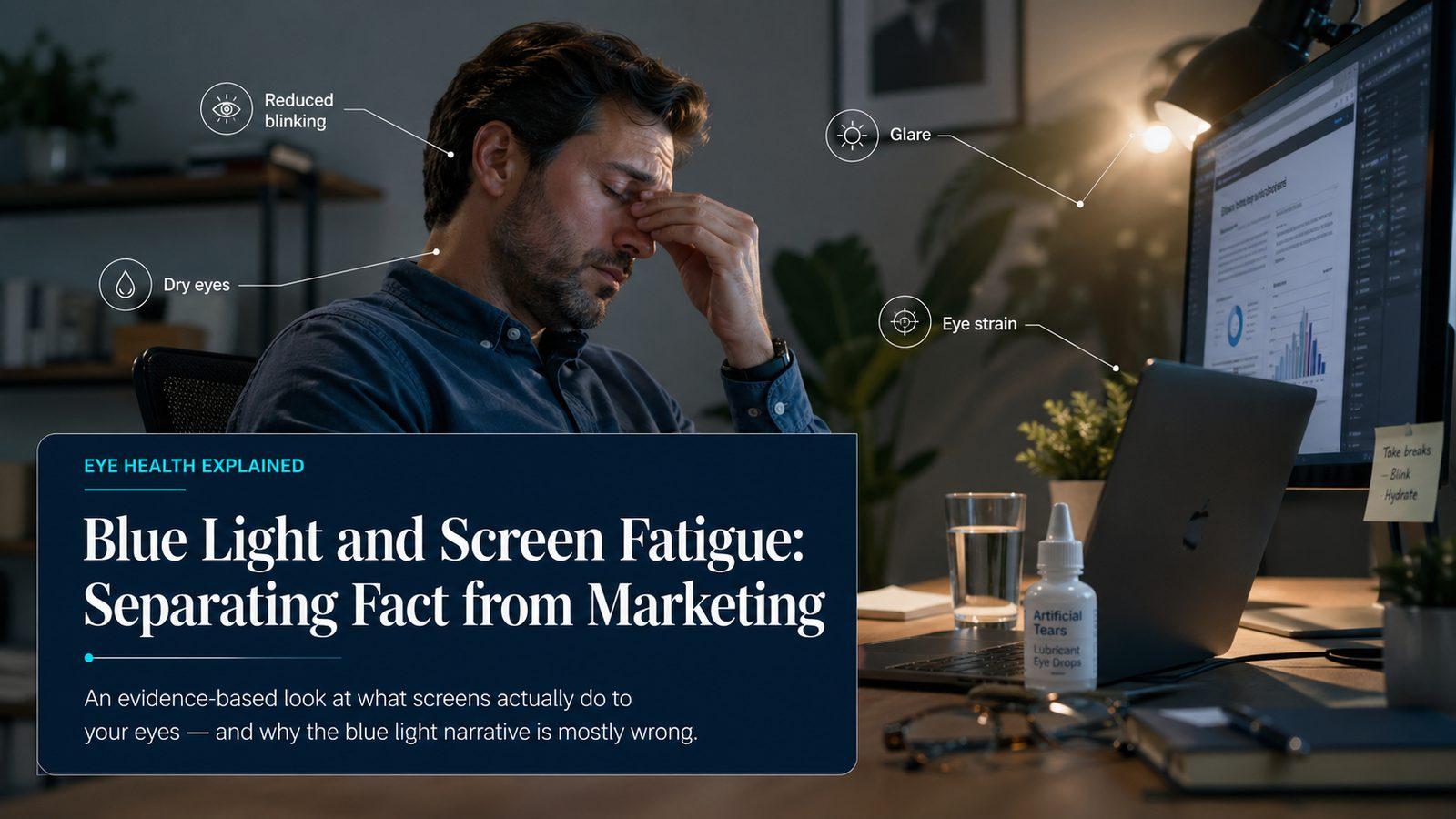
Every optician's shop in Oman now sells blue-light blocking glasses. Every phone has a "night mode." Social media is full of claims that screens are damaging your retinas. Almost none of this is supported by evidence — but real screen-related eye problems do exist, and they are being drowned out by the blue-light noise.
What the evidence actually says about blue light from screens
Screens do not emit enough blue light to damage the retina
Blue light at very high intensities (like industrial UV sources or looking at the sun) does cause phototoxic retinal damage. Your phone screen, however, emits roughly 400–500 times less blue light than you receive outdoors on a cloudy day. No peer-reviewed study has demonstrated retinal damage from normal screen use at normal distances.
The American Academy of Ophthalmology, the College of Optometrists (UK), and the Cochrane Collaboration all state that blue-light blocking lenses have no proven benefit for eye health or sleep.
Blue-light glasses do not reduce digital eye strain
A 2021 randomised controlled trial in Ophthalmic and Physiological Optics — the largest to date — found no difference in eye strain, headache, or sleep quality between blue-light filtering and standard lenses after two weeks of computer work.
What actually causes screen fatigue
1. Reduced blink rate
Normal blink rate: 15–20 per minute. Screen blink rate: 5–7 per minute. The resulting corneal desiccation causes the classic "screen eye" symptoms: burning, grittiness, fluctuating vision. This is dry eye triggered by concentration — nothing to do with blue light.
2. Sustained near focus (accommodation fatigue)
Holding focus at 50–60 cm for hours causes ciliary muscle fatigue. Symptoms: difficulty focusing when you look up, headache behind the eyes, neck tension from subconsciously changing head position to find a comfortable focus. The solution is not different lenses — it is the 20-20-20 rule and appropriate near correction for presbyopes.
3. Poor screen ergonomics
- Screen at or slightly below eye level (not tilted up)
- Screen distance 50–70 cm
- Top of screen at or below eye level (so the palpebral aperture is slightly narrower — reducing evaporation)
- Matte screen vs glossy (reduces reflections that cause squinting)
- Screen brightness matched to ambient light
4. Blue light at night: this part is real
Blue light at night does suppress melatonin and disrupt circadian rhythm — but the amounts involved require sustained exposure in the 2 hours before sleep. Night mode / warm colour temperature settings in that window are reasonable. Blue-light glasses worn all day for office work, however, are not addressing this issue.
Ready to Learn More?
Schedule a consultation with our expert team to discuss your vision care options and find the best solution for your eyes. Read next: Eye care in Oman’s heat, sun and dust.