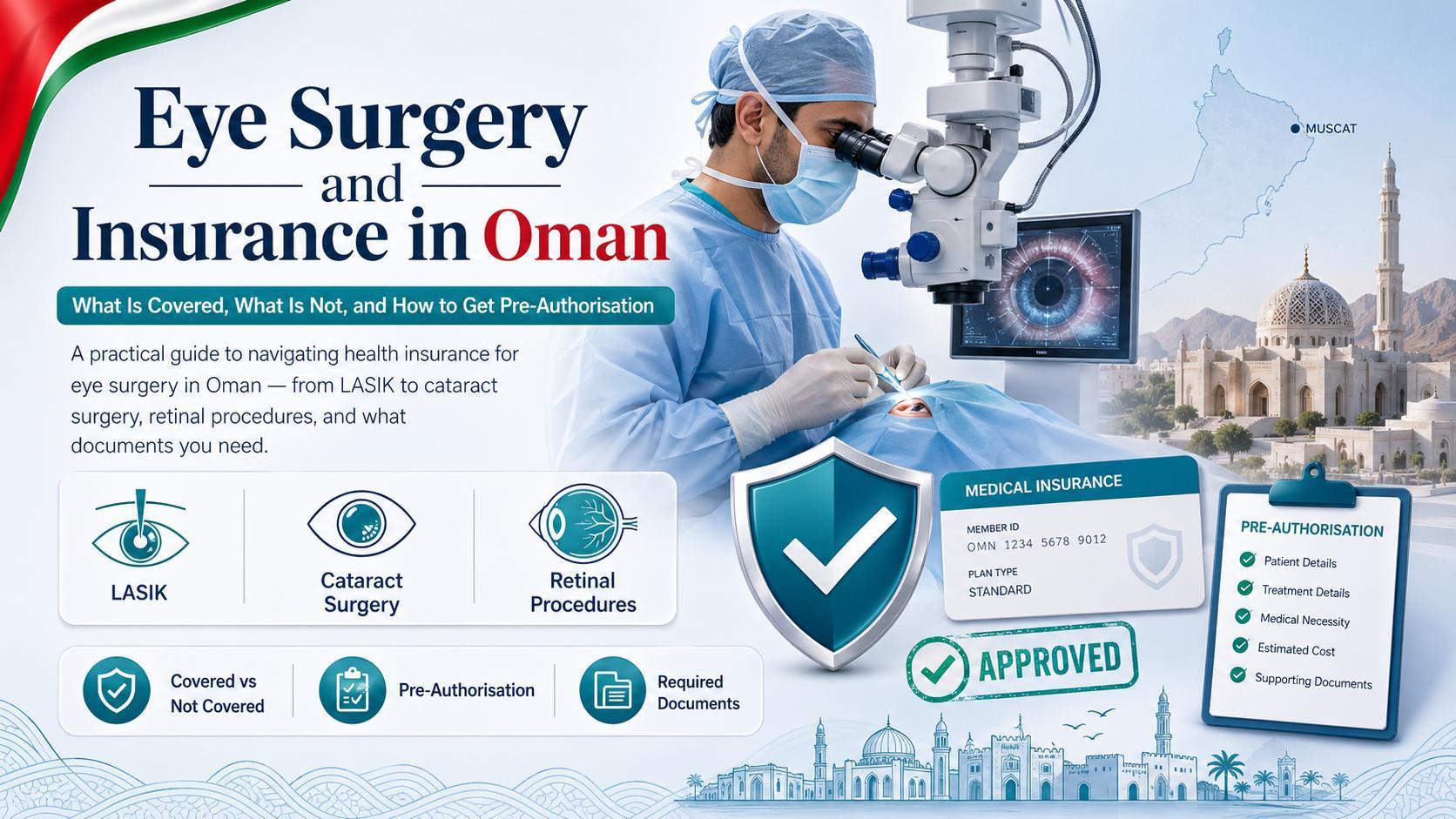
Insurance coverage for eye care in Oman varies dramatically by insurer, plan tier, and procedure type. We see patients every week who assumed their surgery was covered, only to discover at billing that it was not — and patients who gave up on necessary surgery because they assumed it was not covered when parts of it actually were. This guide is our honest map of the landscape.
What is almost always covered
Medical eye conditions
If you have a diagnosed eye disease, treatment is almost always covered under standard health insurance in Oman:
- Cataract surgery — covered by virtually all plans as a medical necessity. The monofocal standard IOL is included; premium IOLs (trifocal, EDOF, toric upgrade) are usually the patient's out-of-pocket expense.
- Glaucoma — diagnosis, drops, laser (SLT), and filtration surgery (trabeculectomy, tubes) are covered.
- Diabetic retinopathy — anti-VEGF injections, laser, vitrectomy covered as disease management.
- AMD — anti-VEGF injections for wet AMD covered by most insurers.
- Retinal detachment surgery — emergency/urgent surgery is covered.
- Corneal transplant (DALK/PK) — covered as medically necessary.
- Strabismus (squint) surgery — covered when functionally indicated.
- Ptosis repair — covered when causing visual field loss (amblyopia risk in children, visual impairment in adults).
What is almost never covered
Refractive (elective vision correction) surgery
- LASIK, CLEAR, PRK, TransPRK, ICL — classified as elective by virtually all Omani insurers. The patient pays out of pocket.
- Corneal crosslinking for keratoconus — this is where it gets complicated. CXL for progressing keratoconus is medically necessary (not elective), but many insurers still deny it. We provide full documentation to support pre-authorisation appeals.
The grey zone: procedures that are sometimes covered
Keratoconus treatment
- CXL: medically necessary. Pre-authorise with: Pentacam reports showing progression, ophthalmologist letter explaining medical necessity, visual acuity records over time.
- ICRS: harder to get covered; possible with detailed medical necessity documentation.
Premium IOLs in cataract surgery
The standard monofocal IOL is covered. The premium upgrade (trifocal, EDOF, toric) is usually paid by the patient; the clinic gives you a written quote after your assessment. Some corporate plans with enhanced benefits may cover toric IOLs — always pre-authorise.
Dry eye procedures
- Artificial tears and cyclosporine drops: usually covered.
- Punctal plugs: covered by many insurers as a minor procedure.
How to get pre-authorisation: step by step
- Get a detailed treatment plan from us in writing, with ICD-10 codes and CPT codes.
- Call your insurer before any procedure — confirm coverage in writing (email).
- For borderline cases (keratoconus CXL, premium IOLs), request a pre-authorisation form and attach: ophthalmologist letter, topography reports, visual acuity records, and a peer-reviewed reference supporting medical necessity.
- If denied, request a formal appeal. Our medical team will provide supporting letters.
- Never proceed without written pre-authorisation for elective/borderline procedures — verbal confirmation is insufficient.
What to bring to your insurance appointment
- Referral letter from your GP or our ophthalmologist
- Diagnostic reports (Pentacam, OCT, fundus photography)
- ICD-10 diagnosis code and CPT procedure code from our billing team
- Previous treatment records
- Your insurance card and civil ID
Ready to Learn More?
Schedule a consultation with our expert team to discuss your vision care options and find the best solution for your eyes. Read next: Eye care insurance and payment in Oman.