Parents in Oman often ask us: "Should I bring my child if they have not complained about their eyes?" The honest answer is yes — because the eye conditions that most threaten a child's long-term vision rarely cause pain or obvious symptoms in the early, treatable stages.
The recommended schedule
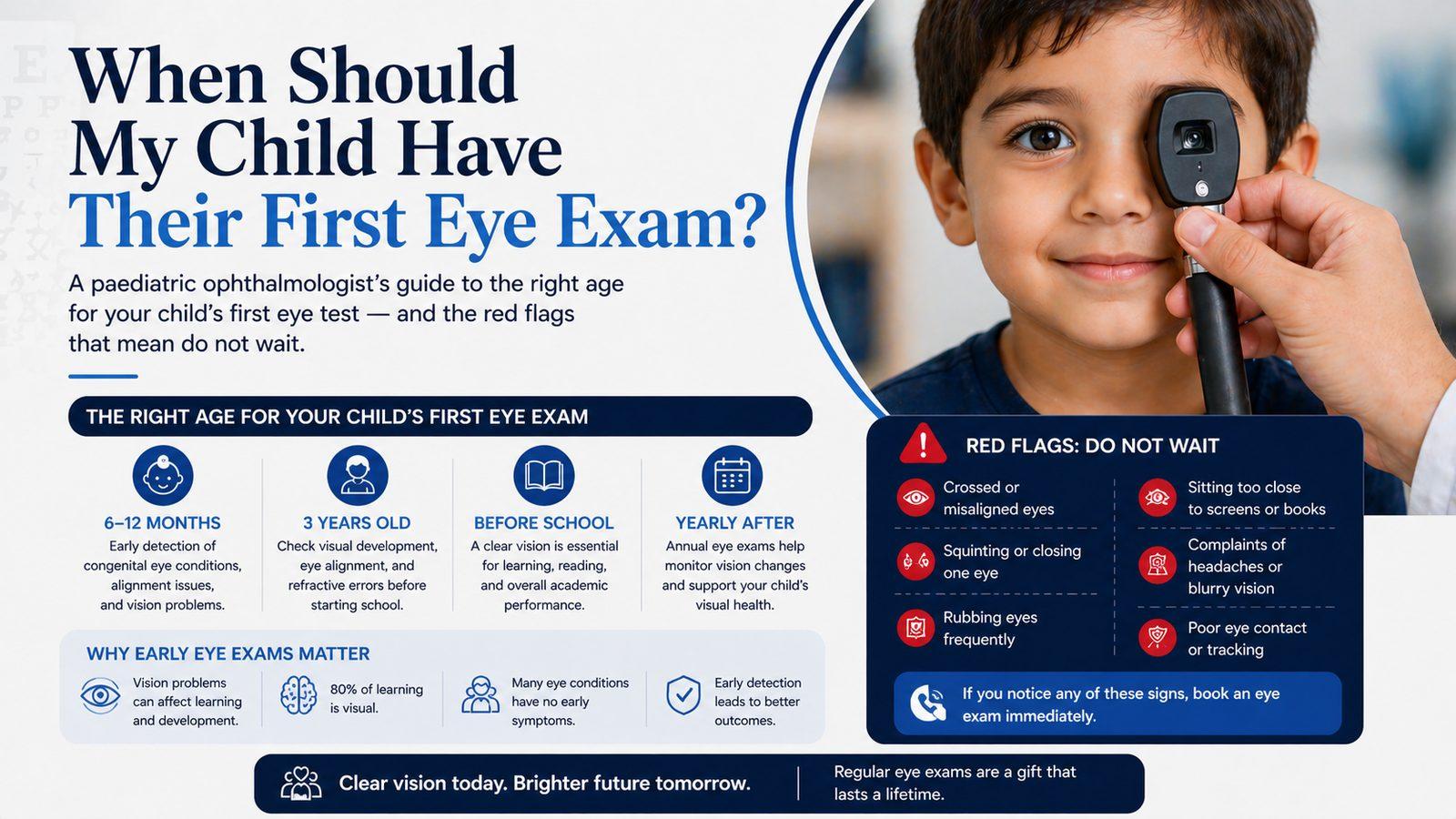
Newborn (in the hospital)
All newborns should have a red reflex test performed by the paediatrician. This rules out congenital cataract, retinoblastoma, and corneal problems. If the reflex is absent, white, or asymmetric, urgent referral to us.
Age 6–12 months
A paediatric ophthalmology visit is warranted if:
- Any family history of childhood squint, amblyopia, or high refractive error
- The infant does not fix and follow a face at 2 months, a toy at 4 months
- One eye appears to turn in or out, even intermittently
- Nystagmus (rhythmic eye wobbling) is noticed
Age 3–4 years: the critical window
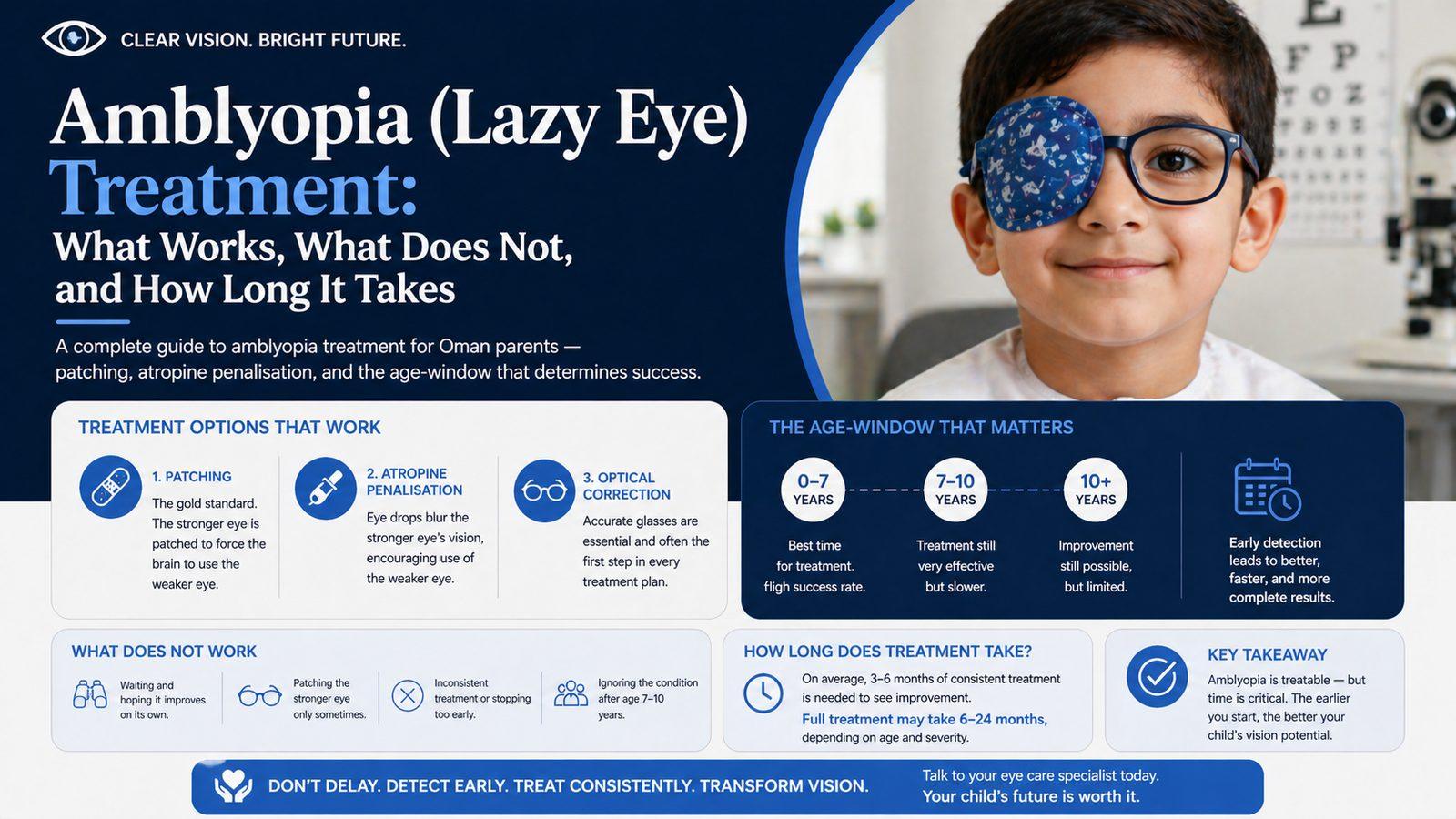
This is our most important age group. Three-year-olds can cooperate with picture-based vision tests (the Lea symbols or Kay pictures), which means we can quantify vision in each eye. Amblyopia (lazy eye) is almost fully treatable before age 7 and becomes progressively harder to reverse after that. A child can have 6/60 vision in one eye with no symptoms — they simply use the good eye.
Bring your child at age 3–4 if you have not done so already, even if they seem to see fine.
Age 5: school entry
Many schools request an eye test before enrolment. Use this as a minimum trigger, not a maximum — bring them at 3 if possible.
Age 6–7 onwards: annual checks if myopic
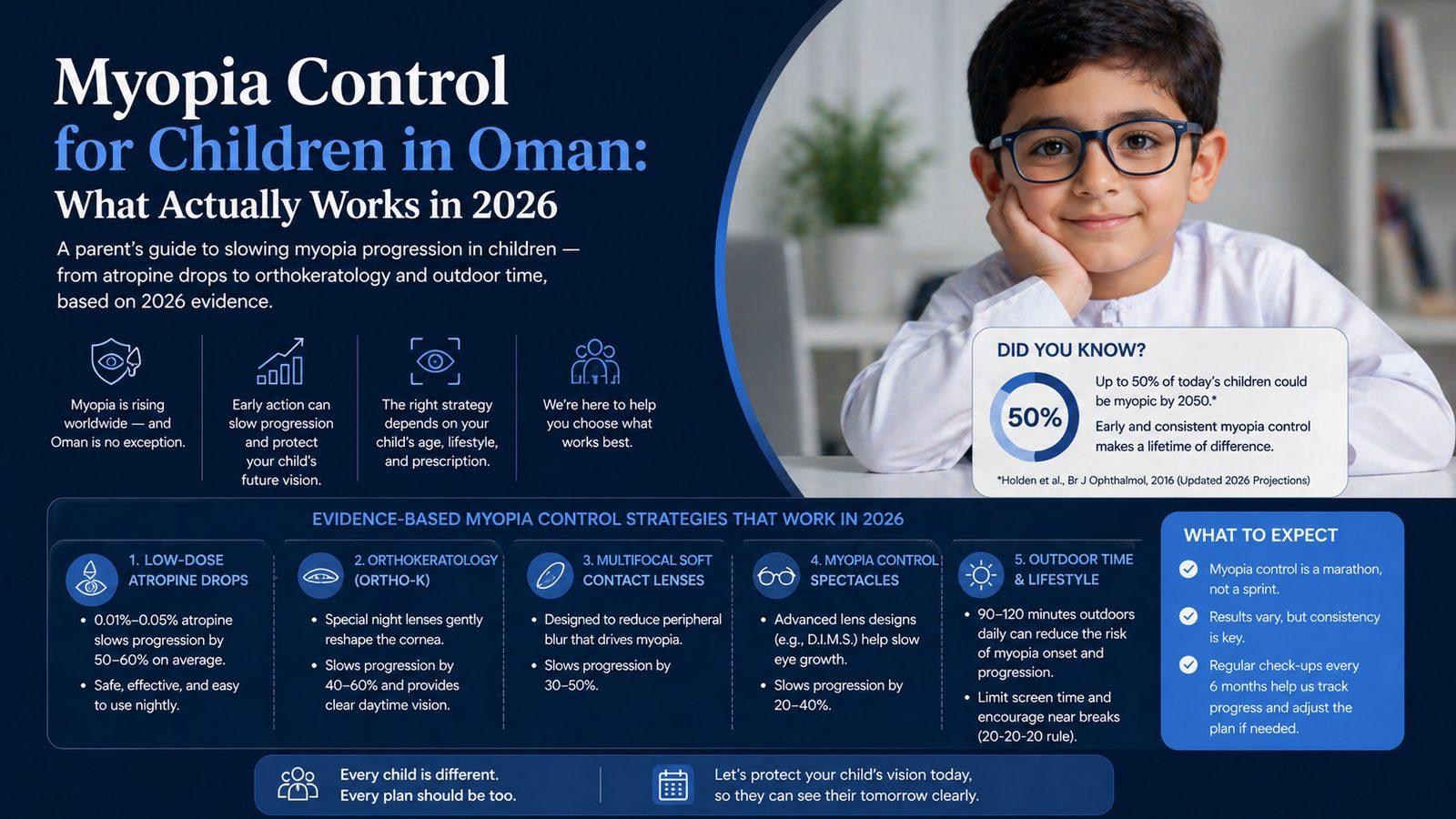
Myopia (short-sightedness) in children progresses rapidly in the 6–14 age window. If your child is myopic at age 7, annual checks and myopia control discussion are essential.
Red flags: come sooner regardless of age
- One eye turns in or out (esotropia/exotropia)
- Head tilt or head turn to see
- Closing one eye in bright light
- Sitting very close to the TV or holding books very close
- Frequent squinting or rubbing
- White pupil in photographs (leukocoria — urgent, rule out retinoblastoma)
- Droopy eyelid (ptosis) — can cause amblyopia
What to expect at a paediatric eye exam
Our paediatric appointments are 45–60 minutes. We use cycloplegic drops (dilating drops that also relax the focusing muscle) to get an accurate refraction unaffected by the child's accommodation. Many children are dramatically more long-sighted than a standard test reveals.
Ready to Learn More?
Schedule a consultation with our expert team to discuss your vision care options and find the best solution for your eyes. Read next: Children's eye doctor in Oman: the full guide.