
Comprehensive Eye Care
PRK/StreamLight Surgery Preparation Guide
Back to Guides

PRK/StreamLight Surgery Preparation Guide

Photorefractive keratectomy (PRK) is an out-patient surgical procedure used to correct refractive errors (myopia, hyperopia, astigmatism) and to eliminate/reduce dependency on glasses or contact lenses.

252 views

Important Information

Please read this guide carefully and follow your doctor's instructions, which come first if they differ from this guide. If you have any questions, don't hesitate to contact our medical team.

Before Surgery

Important preparation steps

PRK is suitable for most patients, but your ophthalmologist will advise you about certain conditions that may prevent you from being a good candidate for this procedure. Therefore, any medical conditions you may have (such as progressive eye diseases or systemic diseases causing dry eyes) are vital information for your ophthalmologist. Patients for PRK should be over 18 years of age with a stable glasses prescription for at least one year. Depending on the power of your glasses, corneal thickness, and other characteristics of your cornea, you may be advised to have PRK rather than other types of vision correction surgery. A thin cornea is one such instance. Your surgeon may prescribe you eye drops or suggest treatment of any underlying eye disease in preparation for your surgery. Soft contact lenses should not be used for one week and hard contact lenses should not be used for 3–4 weeks prior to the operation. Patients should not use eye make-up on the day of the surgery. Also, the doctor should be informed about using any topical or oral medications, any previous or present eye/systemic diseases, previous eye surgeries, and current pregnancy or lactation.

During Surgery

What happens during the procedure

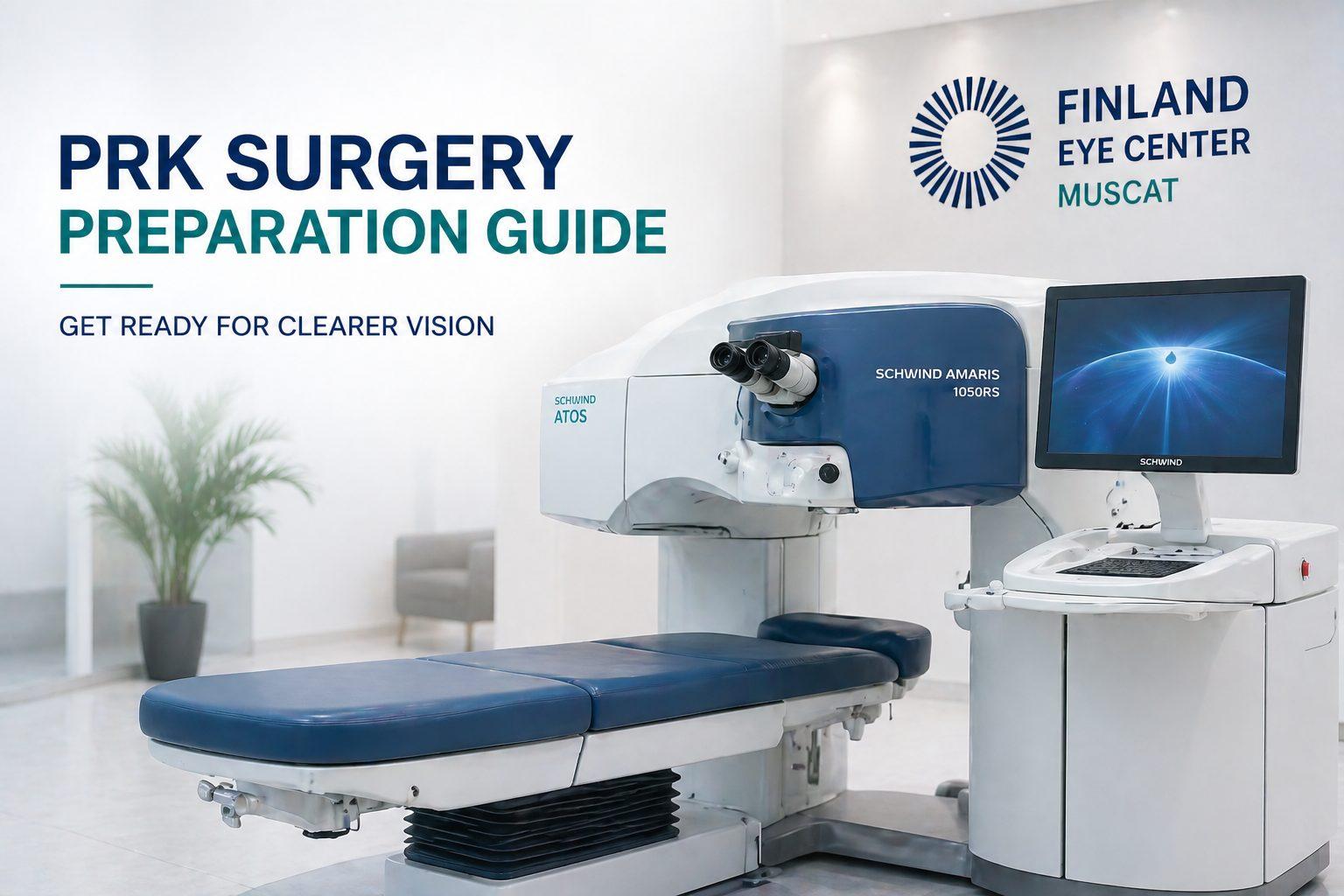
PRK is performed with the patient in a lying position in an outpatient surgical suite. Before entering the suite, the eye area is cleaned, and a surgical cap is placed to cover the patient's hair. You get the first eye drops before entering the suite with more drops throughout the procedure including anesthetic drops to avoid discomfort. These drops may sting briefly. An eyelid holder is placed between the eyelids to keep them open and prevent you from blinking. While one eye is being operated, the other is covered. The epithelium (superficial layer of the cornea) is gently removed by laser (in Streamlight PRK) or by certain substances to reveal the surface to be laser-treated. A special laser for sculpting the area, pre-programmed with measurements customized for your eyes, is centered above the eye. A pupil tracker is used to keep the laser centered on your pupil during surgery. You will be instructed to stare at a green blinking light while the laser sculpts the exposed corneal tissue. You will hear the buzzing of the laser and you may notice a burning smell. Both are a normal part of the procedure. After the laser has completed reshaping the cornea, the surgeon places a bandage contact lens for 3–5 days to help the healing process and to facilitate the regrowth of the epithelium. You will be fully conscious throughout the procedure, which lasts approximately 5–7 minutes per eye.

After Surgery

Care and recovery

You will be escorted to a recovery room to rest for a while after which your eyes will be checked. After the checkup you may go home but you will need someone to take you as you will not be able to drive. It is advised to use dark glasses on your way home as bright lights may feel uncomfortable. You will be instructed to use eye drops to avoid infections, speed the healing process, and moisten the cornea. Please do not leave the clinic before your eyes have been examined and the post-operative appointment has been given. Common symptoms during the first days: • Mild pain or burning sensation • Foreign body sensation in the eye • Tearing and light sensitivity • Temporary blurred vision

What to Expect

Expected outcomes

You will be given a sick leave for 3–5 days due to discomfort/foreign body sensation, which can be quite unpleasant. Swimming and heavy exercise should be avoided for two weeks, and eye make-up should not be used for one week after the operation. Please speak with your surgeon if you have any concerns. With an experienced doctor and careful patient selection, complications are rare and usually be treated without any loss of vision. Possible complications include: dry eyes, long healing period/delayed recovery, glare or halos, over or under-correction, corneal haze or scarring, increased sensitivity, infections, and ectasia. Some complications may require extra medications or further procedures such as lacrimal plugs, glasses, contact lenses, corneal cross-linking, re-operation, or corneal graft.

Do's and Don'ts

Essential guidelines for recovery

Do's

  • Use Tymer drops every 2 hours first day, then twice daily for a week
  • Use OPTIVE drops every 2 hours first day, then 4 times daily for 2 months
  • Use OPTILONE 3 times daily first month, 2 times second month, 1 time third month
  • Wear protective goggles for 3 days after surgery
  • Use sunglasses when outside
  • You can do Sujud next day
  • You can use mobile and watch TV next day
  • Return to sports after one week

Don'ts

  • Don't rub your eyes
  • Don't use eye makeup for one week
  • Don't play contact sports (football, combat sports) for one month
  • Don't swim in sea/pool for one month
  • Don't sit with Bukhur and perfumes indoors for one week
  • Don't use colored contact lenses for 3 months
  • Don't drive at night during first week

Frequently Asked Questions

Answers to common questions

QWhat is PRK?

Photorefractive keratectomy (PRK) is an out-patient surgical procedure used to correct refractive errors (myopia, hyperopia, astigmatism) and to eliminate/reduce dependency on glasses or contact lenses. PRK uses laser to reshape the cornea and to improve the way the eye focuses light onto the retina.

QAm I a good candidate for PRK?

PRK is suitable for most patients over 18 years of age with a stable glasses prescription for at least one year. Your ophthalmologist will evaluate your corneal thickness and other characteristics to determine if PRK is the best option for you, especially if you have a thin cornea.

QHow long does PRK take?

The procedure lasts approximately 5–7 minutes per eye. You will be fully conscious throughout the procedure.

QWhen can I return to normal activities?

You will be given a sick leave for 3–5 days. Swimming and heavy exercise should be avoided for two weeks, and eye make-up should not be used for one week after the operation.

QHow many follow-up visits are required?

Follow-up visits are recommended 3–5 days later to remove the bandage contact lens, during the second week after the operation and in 3 months. Sometimes, more visits are advised depending on individual circumstances.