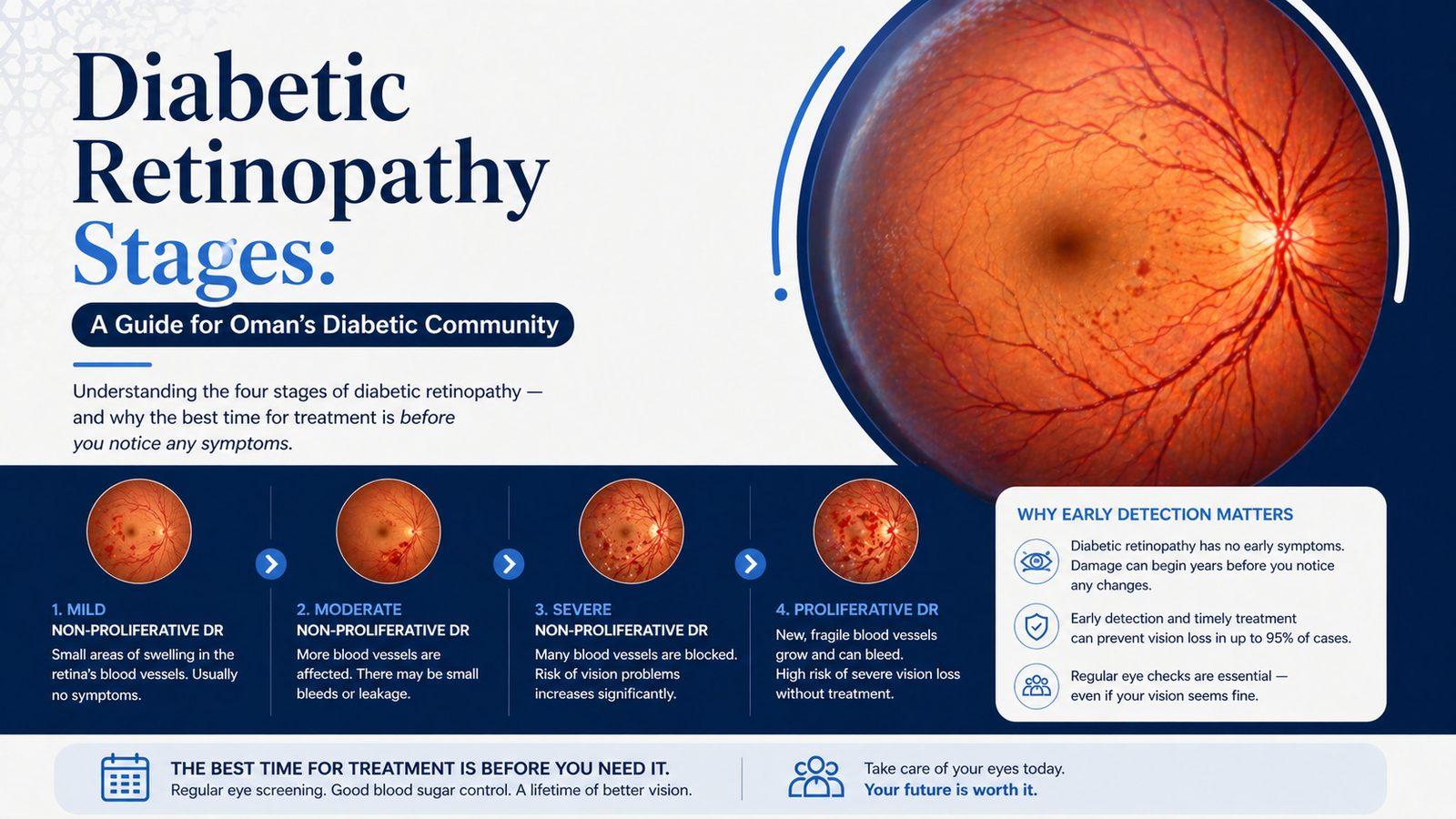
Oman has one of the highest rates of diabetes in the world — over 12% of adults. Diabetic retinopathy is the leading cause of new blindness in working-age adults. The tragedy is that it is almost entirely preventable with screening and timely treatment, yet we still see patients arriving with proliferative disease and vitreous haemorrhage that could have been caught at a routine annual exam years earlier.
How diabetes damages the retina
Chronic high blood sugar damages the walls of the tiny blood vessels that feed the retina. First they leak. Then they close off. Then the retina, starved of oxygen, grows new abnormal blood vessels (neovascularisation) that bleed and form scar tissue, pulling the retina off.
The four stages
Stage 1: Mild non-proliferative diabetic retinopathy (NPDR)
Small areas of balloon-like swelling in retinal blood vessels (microaneurysms). No symptoms. Vision is normal. Visible only on dilated fundus exam or retinal photography.
Treatment: None for the retina — but intensive blood sugar, blood pressure, and lipid control. HbA1c target < 7%.
Next visit: 12 months.
Stage 2: Moderate NPDR
More vessels blocked, more microaneurysms, "cotton wool spots" (nerve fibre layer infarcts), hard exudates (lipid deposits). Still often no symptoms. If the macula (centre of vision) is involved, macular oedema may cause reading difficulty.
Treatment: Same systemic control. If macular oedema, anti-VEGF injections or laser.
Next visit: 6 months.
Stage 3: Severe NPDR
Many blocked vessels, intraretinal haemorrhages in 4 quadrants, venous beading. High risk of conversion to proliferative disease within 12 months. No new vessels yet.
Treatment: Pan-retinal photocoagulation (laser) may be offered preemptively. Anti-VEGF injections if macular oedema.
Next visit: 3–4 months.
Stage 4: Proliferative diabetic retinopathy (PDR)
New blood vessels grow on the retinal surface and into the vitreous. These bleed (vitreous haemorrhage — sudden vision loss), contract, and can cause tractional retinal detachment. This is the stage that causes blindness.
Treatment: Urgent pan-retinal laser + anti-VEGF injections. Vitrectomy surgery for non-clearing haemorrhage or tractional detachment.
Macular oedema — the separate threat
Diabetic macular oedema (DMO) can occur at any stage. It is the most common cause of vision loss in diabetes and does not require PDR to develop. Monthly anti-VEGF injections are the standard of care and can restore lost vision if caught early.
The Oman context: who needs annual screening?
- All Type 1 diabetics from year 5 of diagnosis
- All Type 2 diabetics from time of diagnosis
- Anyone with poorly controlled diabetes or hypertension should be seen every 6 months regardless of stage
Ready to Learn More?
Schedule a consultation with our expert team to discuss your vision care options and find the best solution for your eyes. Read next: Diabetic eye care in Oman.